· ai · 4 min
What a Time to Be Alive
Nobody needs permission
I logged into LinkedIn last week for the first time in a while. Post after post from business owners explaining, defending and apologising for using AI.
I get it. You're worried a customer will think you cut corners. That the work is somehow less yours.
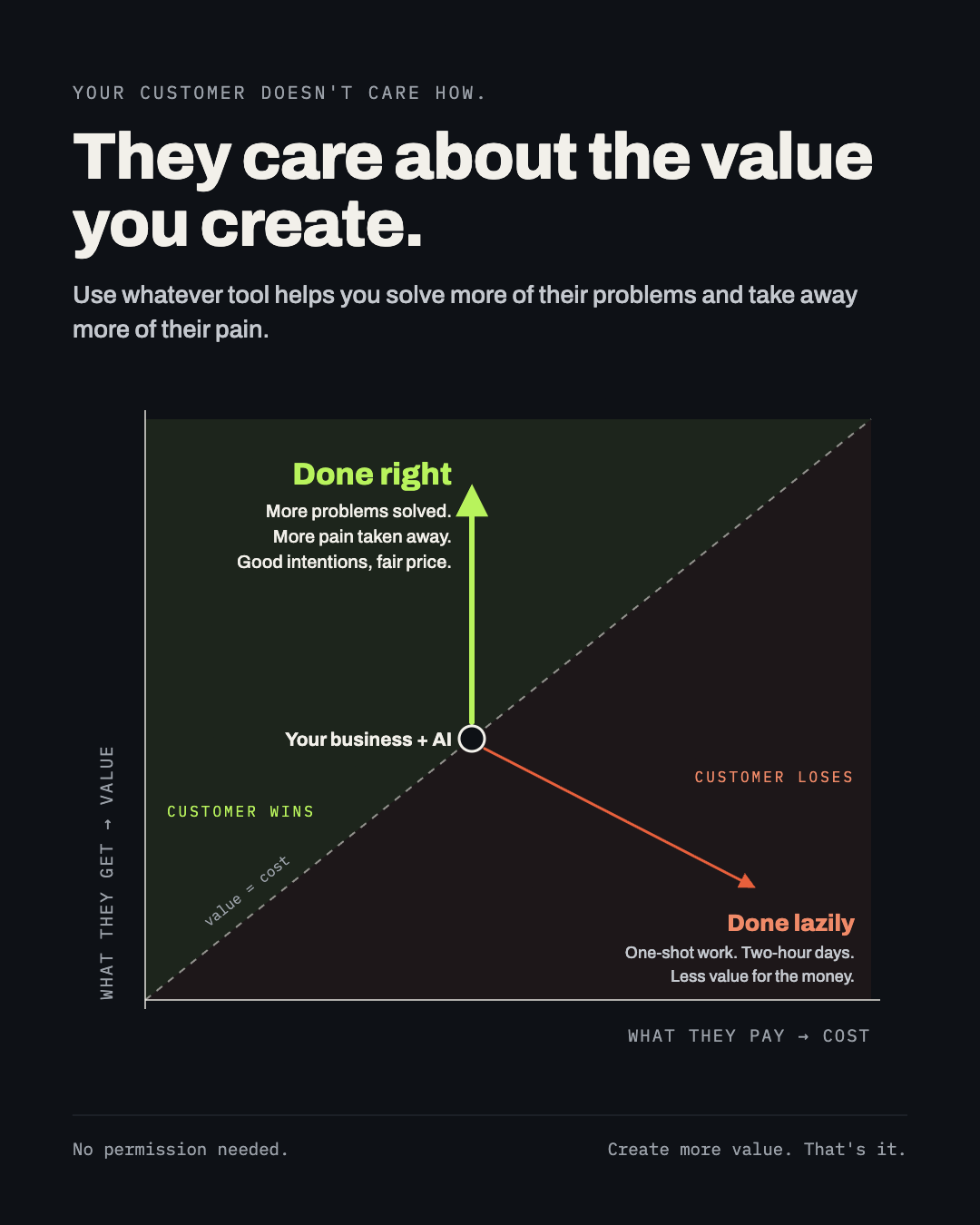
But I've been building businesses for 18 years. Six of them. I've delivered outcomes and made plenty of mistakes along the way. Not once has a customer asked me how I did the work.
They ask whether it worked. Was the outcome delivered? Was the value there?
That's the only test that has ever mattered. And right now, the people who pass it fastest are the ones who've stopped apologising.
The funnel
Andrej Karpathy put rough numbers on something I've felt for months. His napkin maths goes like this:
- About 6 billion people have barely touched AI at all.
- One to two billion use free chatbots now and then. To them it's a slightly better Google or a writing aid. Plenty of smart professionals sit here, because their work is mostly talking to people.
- Around 20 million, roughly 0.2%, use frontier AI for serious work in code and maths. They've watched projects that took weeks or months get done by agents from a prompt.
- About 5,000 inside the labs see what's coming next.
His point is that the gap between those groups isn't closing. It's widening. Most people have met a derpy chatbot. A small slice are feeling the ground move under their feet.
If you're in the middle of that funnel, you're not stupid and you're not lazy. This happened fast. A year ago Karpathy himself was still typing code by hand.
But it has happened. So let me show you what the 0.2% looks like from where I sit.
One week, one founder
From 5 to 12 October I worked on a live marketplace with three connected apps. It was me, Claude, and a couple of coding agents doing the edits. Here's what got done:
- Security across all three apps. A full review closed 28 potential issues before any of them became problems, with a few parked on purpose. Retests came back clean.
- Billing. The payments flow was hardened, sign-up was simplified and the edge cases were tested on real cards.
- A full brand and design refresh. New wordmark, colours, share images and emails, and every page redesigned for phone and desktop.
- Conversion and copy. Two adversarial reviews, a positioning rethink, a rebuilt sign-up page and a rewrite of the home page story.
- An architecture review for the next two versions.
Behind that sit about 63 written change briefs, each checked line by line before it went live. That's 1.7 billion tokens.
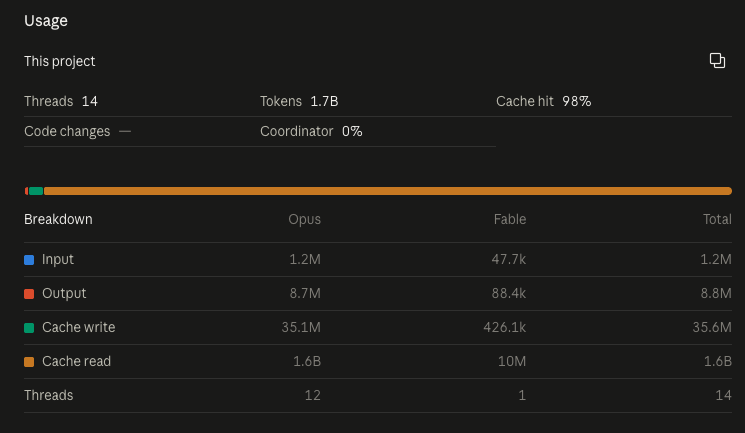
Then I asked a simple question: what would this have cost in late 2024, with a good UK team of freelancers working the normal way?
| Late 2024, the normal way | October 2026 | |
|---|---|---|
| Team | Pen tester, developer, brand designer, UX designer, copywriter, architect, project manager | Me, plus AI agents |
| Effort | About 155 specialist days | About 8 days |
| Calendar time | 4 to 5 months | 1 week |
| Cost | Around £95k to £105k (a London agency: about £140k) | A fraction of one monthly subscription |
Those are estimates, not quotes. But the months aren't padding. Pen testers are booked weeks out. Design waits for copy, build waits for design, and every review round adds days. The agents don't queue behind each other.
What the work looks like now
I've always been a geek. I studied programming at university, then walked away from it. For years I tinkered with websites and hardware instead, while building a career in business, operations and marketing. A brown belt there. A white belt at building software.
But that passion never died. I was playing with Cursor in 2024 and started building with agents on Replit in March 2025. Did I understand it? Nope. But I was hungry. Since then I've become a certified Level 4 Advanced Builder on Replit and one of its top 1% of users, and I opened my own GitHub repo in January this year. Getting to learn all over again, finding a new way to work and being on the cutting edge is a privilege. I wake up every day raring to go.
So the work isn't me typing code. It looks like this:
- Spin up several projects in the cloud at once.
- Point swarms of agents at the problem.
- Run end-to-end tests and adversarial passes, where one agent's whole job is to break what another built.
- Get concepts out at a speed that still feels slightly unreal.
My job is the part 18 years actually trained me for. Knowing what good looks like. Writing a clear brief. Saying no. Checking every change before it goes live.
That's the bit nobody tells you. The business skills you already have didn't become worthless. They became the bottleneck, which means they became the most valuable thing in the room.
What a time to be alive
The ground hasn't "started to shift". It has shifted, and the gap widens every week.
That sounds scary. I think it's the opposite.
If you've ever had an idea you shelved because you couldn't afford the developer, the designer and the six months, that excuse is gone. If you've run a business on gut feel and graft, those are exactly the skills that steer this stuff. And if you've felt behind, you're closer than you think. The distance from the middle of the funnel to the 0.2% isn't a degree. It's a problem you care about, big enough to stretch the tools.
The people still writing "is AI cheating?" posts will keep writing them. Meanwhile, their competitors are shipping.
So stop asking permission. Ask one question: are your customers winning? If yes, use whatever gets them there.
Then go and build the thing you shelved. I can't think of a better time to be doing this.