About
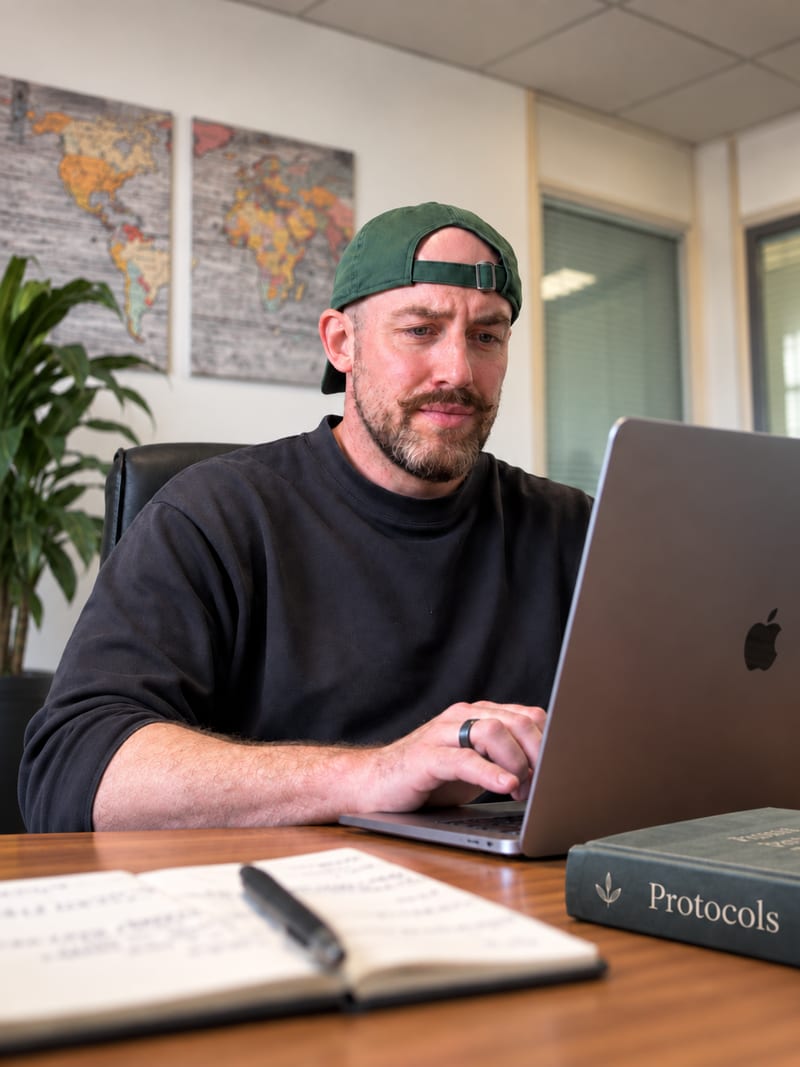
Hey, I'm Tariq 👋
Founder, dad, generalist. I build products with AI, market them myself and share what I learn. No guru shit.
I've been the geek my whole life. Business took the front seat for a while, and AI brought me back.
The long version
My uncle got me started. I played International Karate on his Atari, then he bought me a Sega Master System. Always a Sega guy. Then came the PC: Prince of Persia on the big floppy disks, and plenty of Minesweeper and Solitaire. By the mid-90s my PC gaming had properly taken off: Duke Nukem, Quake, Unreal Tournament, then Counter-Strike. I played rugby and basketball too, but lunchtimes were Pokémon and weekends were StarCraft and Command & Conquer at LAN parties.
In 2004 I turned up at Bournemouth University with a custom-built, water-cooled gaming PC. Everyone asked what the fuck it was. I studied Business Information Technology, which was mostly networking, SQL, HTML and Java, and still found time to get banned from Steam twice. My buddy Steve and I even built our own World of Warcraft client and spawned Ragnaros in Ironforge.
Then I kind of fell out of love with code and qualified as a bricklayer instead. The financial crisis killed that plan, so in 2008 I co-founded Jet Connections with my dad. He had the aviation experience; I had the IT.
For the next nine years I ran service businesses, and I was bloody good at it. I still built the websites and ran the servers, but my head was in growth: leads, conversion, sales.
In 2017 I started an e-commerce business selling dry herb vaporisers. I loved it, right up until import and export, stock, cash flow, GDPR and Brexit burnt me out. So in 2020 I went back to Jet Connections, built out the charter department and landed a deal worth around $3m moving COVID test kits.
In 2022 I joined ACOM Aviation, my first SaaS company, and started creeping back towards the code. Then in January 2023 I jumped on generative AI and was hooked. LLMs opened a new world to me. Suddenly one generalist with a bit of high agency could build, market and sell on their own.
That's what I do now. I'm the founder and CEO of Empty Leg Finder, and I build my own products and tools.
Eighteen years and six companies in, the biggest lesson is to get rid of anything that drains you. A client, a customer, a gig. If it's taking too much from you, forget about it.
Receipts
- Co-founded Jet Connections, which does $2–3m a year with a team of three.
- Structured aircraft sales worth millions.
- Ran detailing contracts for the US Air Force, the Ministry of Defence and Universal Flight Support.
- Built an e-commerce store to six figures in 18 months, solo, with zero ad spend.
- Led go-to-market at ACOM Aviation, onboarding 400 charter brokers and 200 operators across Europe in eight months.
Plenty of fuck-ups too. I own those as well.
If you're a builder, a founder or just someone with a passion, come say hi or find me on X.
Timeline
| Year | Company | Role | Status |
|---|---|---|---|
| 2008 | Jet Connections — Private jet management, sale, acquisition and charter | Co-founder & Director | ● live |
| 2011 | Fly Bright — Private jet detailing | Founder | burnt out |
| 2016 | Vape Bazaar — E-juice and liquids | Founder | failed |
| 2017 | The Hed Club — Dry herb vaporisers and accessories | Founder | burnt out |
| 2022 | ACOM Aviation — Technology incubator for private aviation SaaS | Founder & CEO of Empty Leg Finder | ● live |
| 2026 | Deir Group — Holding company for my products | Founder | ● live |
Off the clock
Dad first. Gamer, food lover, gadget obsessive. Based in Oxfordshire, UK.